
Why a New Crypto Law Can Move Price Today but Change Nothing Until 2028
Japan's crypto tax cut passed the lower house in 2026 but does not take effect until 2028. Here is why traders confuse the headline date with the effective date.
By the Deriv desk · 26 June 2026 · 4 min read

A law has two dates: the day it is announced and the day it actually changes your money. Confuse the two and you misprice the trade.
Japan is reclassifying crypto under its Financial Instruments and Exchange Act. The plan cuts tax on a list of coins from as high as 55% to a flat 20%, treating them more like stocks. The bill advanced through the lower house on June 11, 2026.
That is the headline. Here is the catch: the tax cut for individuals is targeted for 2028. The announcement is a sentiment event now. The cash-flow change is years away.
Why the announcement date and the effective date are not the same thing
A bill that passes today does not put money in anyone's pocket today. It sets a future date when the rules change. Markets react to the news instantly, but the actual economic effect arrives on its own clock.
For Japan's crypto holders, nothing about their tax bill changes in 2026. A holder selling this year still faces the old rates. The 20% flat rate is a 2028 event, and a Japanese spot ETF is only discussed as possible around 2027. The good news is real, but it is dated for later.

Buy the rumour, sell the news: the 2024 ETF lesson
This gap has a recent precedent. In January 2024, US regulators approved spot Bitcoin ETFs, the structural change American buyers had waited years for.
Bitcoin then fell roughly 15 to 20% in the two weeks after launch. The structural win was genuine, but the announcement-day price was a poor guide to what came next. Real inflows took months to accumulate, and the rally to new highs came later, not on the headline.
The pattern repeats because traders front-run the good news, then sell once it lands. A structural positive and the short-term price can point in opposite directions.
What the tape is doing while Japan makes headlines
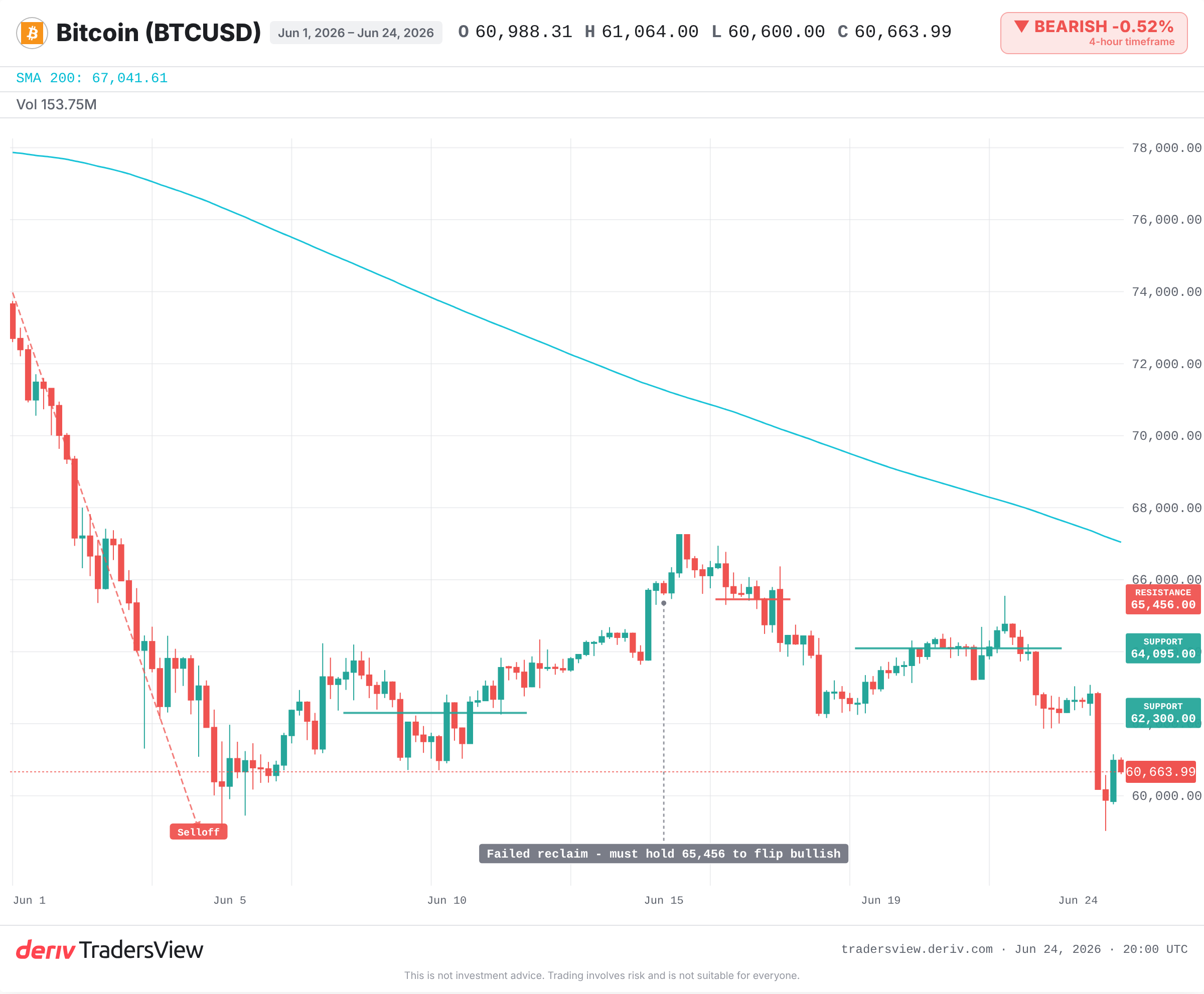
Right now the present-tense selling is winning. Bitcoin broke below support near $65,456 earlier in the week, then clawed back to around $64,000. Ethereum is holding near $1,725 after losing several supports. Ripple stabilised near $1.14 after a sharp gap down.
Behind the price, Bitcoin ETFs have posted about $6.35 billion in 30-day outflows. That is real money leaving now. A distant, conditional tax benefit is being weighed against present selling, and selling has the upper hand.
105 coins, not all coins: check the list before trading the headline
One more trap. The flat 20% rate applies to 105 designated cryptocurrencies, not every token. Reclassification laws pick winners.
Before treating the news as a tailwind for any specific asset, the question is whether that asset is actually on the list and whether the criteria exclude it. The headline says "crypto." The fine print says "these 105."
What to watch from here
The evidence leans toward treating this as a slow structural tailwind, not a near-term trigger. The bullish case needs time and confirmation; the bearish case is already in the price action.
- Whether the bill clears Japan's upper house intact, not just the lower house.
- Whether the 2028 individual tax date and the 2027 ETF timeline hold or slip.
- Whether ETF outflows reverse or extend past the reported $6.35 billion.
- Whether Bitcoin reclaims and holds above $65,456, or fades toward the 200-week average region near $62,300.
If price keeps fading despite positive Japan headlines, the catalyst is either already priced or simply too far off to matter yet. Trading is risky, and a distant law is a weak reason to fight what the tape is doing now.
Frequently asked questions
It moves designated cryptocurrencies under Japan's Financial Instruments and Exchange Act, treating them more like stocks. The bill advanced through the lower house on June 11, 2026 and proposes a flat 20% capital gains tax on qualifying coins.
The flat 20% rate for individuals is targeted for 2028. The bill's passage and the date it changes a holder's tax bill are separate events, with the effective change years after the headline.
No. It applies to 105 designated cryptocurrencies, not every token. Whether a specific asset qualifies depends on the criteria and the final list.
Traders front-ran the news, then sold once it landed, a 'sell the news' move. Bitcoin dropped roughly 15 to 20% in the two weeks after launch before later rallying as real inflows built up.
The fund has confirmed plans to allocate about 1% of its capital to crypto-related assets within fiscal 2026. Whether the allocation is executed on schedule or delayed is one of the things to watch.